Category: Grief and loss

  • Unappointed

    Unappointed

    Dear lady in the row in front of us at church today,

    Thank you for taking your baby out of his car seat exactly when you did.

    During worship, I watched you and your husband diligently checking under the blanket covered car seat.

    At an unappointed moment, you reached in and took him out of his cocoon. Holding him for a few minutes you swayed back and forth before wrapping him against you in a sling. He was safe. He was content. He was close to your heart. It was the most ordinary, beautiful thing a mother does.

    We had just begun singing, “Even while I’m walking through the valley of death and dying,” when my tears percolated. At times, as any bereaved mother can attest, once the tears are unleashed, they become impossible to control until they are fully exhausted. Then, somehow, more are found.

    See, I lost my precious son almost five months ago. I am in the valley of death and dying, though it doesn’t feel like walking. It is more a military crawl through mud for a few inches then curling into a ball, exhausted and overwhelmed.  Progress in grief isn’t linear. It is not always forward. It is up, down, backward, and inside out. It is chaos.

    For the griever, the world is painful and unpredictable. A song, a scent, a favorite food, almost anything can be a trigger and cause an avalanche until, in unexpected places like church, I am holding on for dear life.

    But then you took your baby out and held him to you.

    His eyes grew bigger as he looked around and heard the singing. He was no longer in the dark, even if he was only sleeping. He was now awake and engaged in a welcoming world.

    The singing continued and the next line in the song became an anchor.

    “I will not fear cause you are with me. You’re always with me.”

    At some unappointed moment, God will carefully take me out of this present darkness. He will restore me.  I will re-engage with the world.

    Until then He holds me close, even here.

  • The Long Pause

    The Long Pause

    Something in me wondered when I took this picture if it would be the last one. There was no real reason to believe it would be. The resident had told us there was less than a one percent chance of fatality during the procedure. Still, if life had taught me one thing, and taught me well, it is that percentages don’t mean a thing.

    There came a distinct moment between his hospital room and a conference room when I knew. When life becomes overwhelming, sometimes focusing on the mundane becomes a survival mechanism. I remember thinking how obnoxiously white everything was—the wall, the floor, the lights of the hallway.

    As a team member walked in front of me, I asked repeatedly, “What is happening with my father?” The reply was always a timid, “Let’s go to the conference room.”

    A moment of clarity came crashing. Deliberate. Merciless. True.

    This is how my father dies.

    A family man to the end, we were blessed to all be beside him and holding his hands as the monitors went to flat.

    Since he left, Wesley, my son, joined him. My father always had a special place in his heart for Wesley. Everyone did. He was that kind of kid. Still reeling with anguish over losing my son, I can smile knowing Grandpa met him on the other side with a “Hey there, Scooter,” and open arms.

    I have buried a husband, a father, and a son. Grieving each of those losses was different because each relationship was unique. All were deep. All were extraordinarily significant. All are deeply missed.

    Losing my father left me feeling vulnerable in the world in a way I had never known. He was my protector from the moment I was born. No matter the distance, I always knew my dad would be there when I needed him. And he physically was, until this day three years ago.

    Death does not diminish love, not even a little.

    The world was instantaneously perilous, and the potential dangers revealed by a vague but overwhelming feeling of exposure. It wasn’t that I knew my father could keep the darkness away. Rather, he was the one who would join me in it. He would help me rebuild after it. I believed him each time he said, “It is going to be okay.”

    Though we expect to lose our parents, having that foreknowledge does not offer much, if any, solace when the time actually comes. Even if we get to have them into the age deemed a long life, the pain is intense. The loss is significant. Having more time does not make it any less so.

    It never seems to be long enough, and we are rarely ready for the long pause before we see them again.

  • July

    July

    July is National Bereaved Parents Month. It is also Disability Pride Month. I live in both those worlds.

    By midlife in America, 1 in 13 white mothers and 1 in 8 black mothers have already endured the loss of a child. They are your neighbors, co-workers, church members, and friends.

    They might be you.

    They are me.

    I often feel as if losing a child is so horrific, even the English language shudders to acknowledge it. We have nouns like widow, widower, and orphan—identities shaped by loss. But when a parent loses a child, English offers no comparable noun. Instead, we borrow the adjective bereaved, a word descended from the Old English verb bereafian: to rob, to deprive, to take away by force.

    It is fitting that there is no unique word because words truly fail to describe the loss of a child. What is taken by force when a mother loses her child is irrevocably soul-ripping. It alters who she is and who she was going to be.

    On February 21, 2026, I was given the title bereaved mother. I didn’t just lose my son. I lost my identity, my hopes, and my dreams of the future. Losing a child defies the laws of nature. It is not meant to be.

    There were several occasions during Wesley’s twenty-four years that I cried out to God, begging Him to let me keep my son. Each time He answered yes, until the last when He answered with a resounding, “No.”

    Though I stood on the precipice many times, I never imagined the human heart could endure a pain this enormous and this deep. I am only four and a half months without him, and I cannot fathom a world in which grief ends. It has already become part of who I am. I will carry the loss of my precious son into every new day, every missed holiday, every memory for which he should have been here. I am told life will form around the loss.

    I am hopeful to learn to love the woman who survives.

    It seems every month has various populations for whom dedicated awareness is applied. July is also Disability Pride month. My beautiful son, Wesley, had multiple disabilities and he gave the best hugs.

    Being a bereaved mother of a child with disabilities is a horrible club to belong to, but I have found support during my loss the same way I did throughout his life —entire, loving, and compassionate. Parents of children with disabilities are ferocious advocates for their children and for one another just as much in death as in life.

    Dedicating months to different groups, to me, boils down to people wanting and deserving to be seen.

    Sadly, we already know children pass away. We know people with disabilities exist and are valuable members of our community.

    Raising awareness seeks for us to do more than know.

    If naming July National Bereaved Parents Month reminds us to ask a bereaved mother about her child and Disability Pride Month nudges us to strike up a conversation with a person with disabilities, then it is helpful. Remembering to do that after July is the challenge.

    And I know we are up for it.

  • The Morning Sun

    The Morning Sun

    When my beloved son passed away four months ago, I knew I would not survive if I failed to find gratitude. My drowning soul knew it was my lifeline.

    The small things were suddenly no longer overlooked. Yet the enormity of loss left me wondering how these tiny, fleeting moments of gratitude might soothe a heart hollowed by grief.

    But I tried. Each morning, I took my coffee, sat on the couch, and waited expectantly for the sun to enter our living room.

    When a caregiver loses their loved one it disrupts life on every level. Our daily routines, our identity, and the enormity of grief are all heaped upon our already exhausted shoulders.

    Finding one good thing, one ritual, one point of gratitude may not seem like much when there is nothing but a seemingly infinite emptiness.

    It takes effort, but it matters. Four months later the sun entering the living room and spilling across my plants has accumulated enough tiny moments of joy that I can breathe, even if just a little, easier.

    What began as an attempt to find the smallest speck of joy will never fill the space my child occupied. But it has helped me to create a new routine and to discover a beauty I had taken for granted. The shadows coexist with the sunlight. They move in tandem, ensuring the plant eventually receives the nourishment it needs without burning the leaves.

    For both the sun and the darkness are temporary. Yet the plant remains.

    Some days light will pour generously through the window, and on others it is hidden behind the clouds. Whether or not it illuminates the room, the sun rises faithfully every morning. Life goes on. As cruel and as benevolent as the truth can seem, somehow, so must I.

    In time, even mourning learns the shape of morning.

  • When The Road is No More

    When The Road is No More

    WordPress reminded me of a blog I posted eight years ago. I wrote the piece below not knowing that I would discover what happens when the second road ends.

    For twenty-four years we drove on our road and were grateful. We knew the alternative would have required the impossible of us and now it has. If life with Wesley was a bumpier road, life without him is a free fall nothingness. It is the surreal, chaotic road of deep drops, roads randomly ending, bridges blown apart, and no way to navigate. It is the stuff of nightmares.

    I am grateful that I always knew the honor of the road we traveled and savored every single mile. It was never a burden or inconvenient. There was inexplicable beauty even though the shadow of a catastrophic event always lingered. It taught us to savor the moment even while living with the reality each one could be the last. And eventually one was.

    I will always remember it with love because we were there together. The road has ended yet the love remains. Even death dare to take something so sacred.

  • Scripture for the Hard Times

    Scripture for the Hard Times

    There is a level of deep grief and when we are in it, Scripture and platitudes do not help. Nothing seems to help. Four months after losing my precious son I am just beginning to emerge long enough to remember and hold onto some of God’s promises.

    May they encourage you.

  • The Gift I Never Asked For

    The Gift I Never Asked For

    Holding Grief and Gratitude After Losing a Child

    Grief is a thief. She takes from every corner, yet sometimes she leaves quiet, involuntary gifts to families like ours.

    Sweet boy, while I am waiting for rebuilding to begin, if it ever does, I wonder who I will become. I will always be your mom and still am to your brothers. And yet it is different now for all three of you.

    One of the confusing truths from the loss of you I am left to untangle is that I will be able to be more present for your brothers now. The gift arrived in a way I never would have asked for, sweet boy. Accepting it with gratitude disconnects somewhere between my heart and my mind.

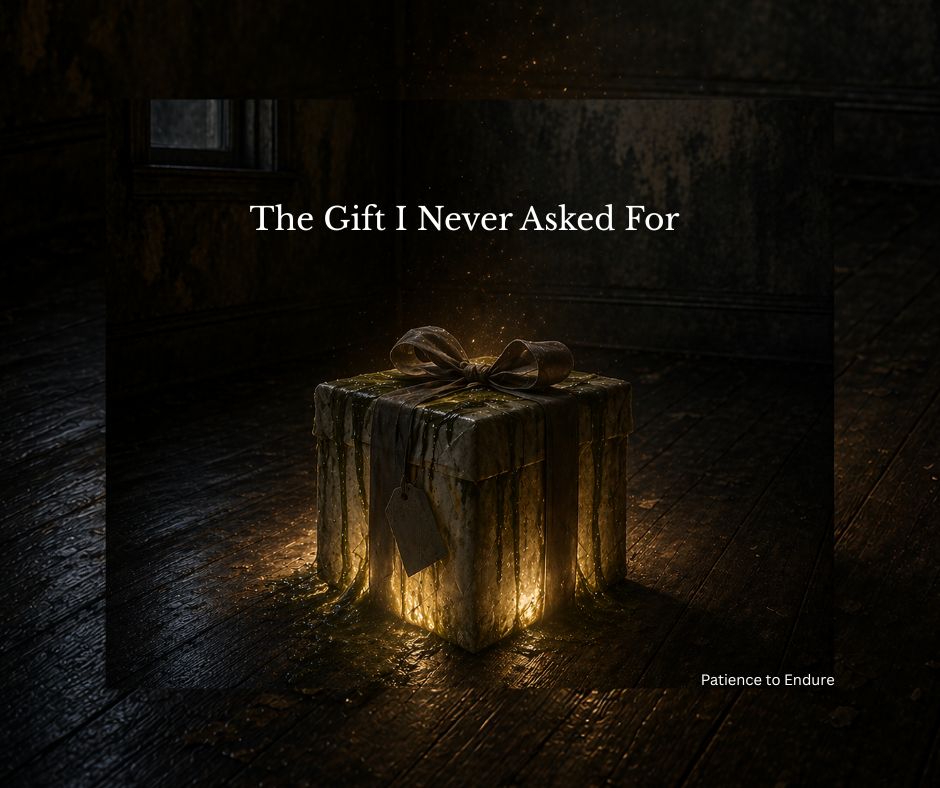
    In an empty room of my heart, Grief has left a box in repulsive wrapping. Inside are gifts made possible only in the after.

    Sweet boy, our family was necessarily built around you. Your complex special and medical needs required intensive attention. Ignoring or delaying them was never an option. It would have been life threatening to you.

    Taking care of you will always be my highest honor, sweet boy, but I missed events for your brothers. I couldn’t take them to see movies very often. Sometimes parent teacher conferences weren’t possible. Performances were missed. Rarely were we able to sit down at a restaurant. We weren’t a typical family.

    We still aren’t.

    Grief moved in.

    Your brothers sacrificed in big ways and small for you, sweet boy. All of us did to give you the best life possible. When the sadness gets too much, I hold to that thought—we did give you the best life possible. You returned the favor a thousand-fold, sweet boy.

    I both detest Grief’s gifts, yet I am grateful.

    How does a mother untangle that?

    Do you remember how we would often go to Target with Nathan? It was one of your absolute favorite outings. On one of those trips, I was unfolding the wheelchair ramp to get you out and saw a family in the car next to us get out and go.

    How odd, I thought.

    I still had to put your socks on and gather your shoes which you took off the minute we got into the car. I needed to make sure your iPad and sippy cup attached to the chair. You always threw them when you were done. We learned to dodge flying iPads, but it was a serious safety hazard in public.

    It wasn’t envy I felt for the family but recognition of a culture vastly different from ours. For us to have their simplicity would have meant we didn’t have you.

    And now we don’t.

    There are no extra steps to take when we go out. It doesn’t matter if a location is accessible. We can hop out of the car and walk in the store except I don’t want to go. I do not want to be anywhere you are not.

    But I wasn’t given that choice.

    What I wouldn’t give to be encumbered because it was all in the care of you. It was never heavy. It was our life and you were my world.

    Nathan asked if someday we would get to take an airplane. Perhaps we will.

    The future and the maps are hidden.

    I have been praying for God to open a door or at the very least crack a window. This enclosed room is suffocating. It is dark with only an occasional break from constant shadows. The air is stifling.

    Sweet boy, just maybe, He is working on building a house while I am waiting for an open door.

    It begins with a gift.

    As an act of faith, I pick it up and slowly, gingerly begin to unravel the bow.

    Perhaps, in doing so, I will untangle the gift from the means by which it came and try to hold it with gratitude.

  • Bed Rails

    Bed Rails

    Grief has a way of wrecking everything—including priorities. Apathy sneaks in just behind her. Nothing seems important.

    How can it be when you are gone?

    This morning Grandma said,

    Do I look like I care what the floor looks like?

    Sweet boy, the floors are not as clean as when you were here. Grandma kept them immaculate because she worried to no end about you crawling. She took her mission to keep you safe and clean seriously. We all did everything we could to protect you from outside harm—we couldn’t stop what happened inside. I am so sorry.

    When you did not come home with me from the hospital, sweet boy, my soul went to sleep.

    I hope one day I might crawl.

    I was so proud when you remembered how to crawl after losing the ability to walk for a while. Nothing ever stopped you. When no one was immediately available to help, you would gently slide out of your chair or off your bed and crawl.

    If you were in the bedroom and someone came to visit, as soon as you heard their voice, you would crawl to the kitchen. You reached the people you loved by any means necessary.

    That, sweet boy, is the tenacity I need.

    On the harder days—most days—I wonder if my story ends with me stuck in bed.

    I hear the people I love in the next room. Everything in me wants to slide off the bed and crawl to them.

    Grief has the bed rails high.

    But God will lower them—in His time.

    My soul is in deep anguish.
    How long, Lord, how long? Psalm 6:3

    Only He is more powerful than she is.

    Sometimes, Grief is louder. She is overbearing and chaotic, but I am hearing God’s whispers again, sweet boy.

    The final say is not hers.

    Bed rails restrict—but they also provide safety. Every night after you fell asleep, sweet boy, I would lift them up to keep you from falling out of bed. Then I would kiss your head and tell you,

    You’re my whole world.

    Every single night.

    My bed rails are not permanently fixed. For now, they keep me safe so I don’t fall while my soul is sleeping. Grief is strong but God can make even her work toward good.

    I am not ready, but I will become.

    Perhaps soon, I will slide out of the bed.

    I will crawl—and nothing will stop me from reaching Him—and those who love me.

    Sweet boy, you taught me and you taught me well.

  • A Whisper from Heaven

    A Whisper from Heaven

    Sweet boy, I drove one our favorite routes today.

    The road has taken some damage over the years. So have I. The view, however, was ever the same.

    Grandma and Aunt Dolly went to see a friend from church play at the Batesville Market. It isn’t the kind of place we would have taken you. The building is old and not accessible. I had to carry Aunt Dolly’s walker up a few stairs and then help guide her as she climbed.

    It felt good to care for someone, even slightly, the way I did for you.

    After leaving them settled, I went straight instead of turning around to get home. You loved our drives—especially that stretch of road. We would listen to music and on nights like this we would have rolled down the windows. I can still see you—mouth open smile and eyes squinting—as the wind hit your face. You would shake your head, flap your arms, and bounce with delight.

    The road is long and winding with majestic mountain views. There are historic homes, gigantic mansions, and farmland with cows and horses. It is quintessential Virginia.

    I sobbed.

    Please God, give me something, anything.

    Relieve this pain even a little.

    Give me peace. Let me know You are here and I am not alone. A sign.

    Anything?

    He was the best part of me, my whole world, and you took Him. Why? Why would you do that to me?

    I am here. Your daughter. Your child is alone and hurt and scared. Won’t you do anything at all to help me?

    Please God. Please.

    Sometimes He calms the storm. 
    Sometimes He calms the child.

    Sometimes He does nothing.

    Or so it feels.

    Grief has revealed a depth of my soul I never knew existed—where tears and agony are abundant. Or perhaps she found the now empty place where you once were and settled right in.

    When God took you back, sweet boy, your heart became infected with bacteria. It spread everywhere.

    When God made me stay, my heart became infected with Grief. She invades everything.

    At the end of the drive, I dried my tears and ended my lamentation with:

    I am holding on to You anyway.

    I was surprised Grandma and Aunt Dolly wanted to stay the entire time. It tickled my heart to envision two ladies in their eighties hanging out listening to jazz on a Friday night.

    When I left a couple of hours later to pick up them up, I stood at the car and looked up at the beautiful spring sky. This time of year, every part of creation announces the new season—even the stars.

    Okay, God. I am asking again for a sign. Would You show me a shooting star? At least let me know I am not alone.

    Sweet boy, wouldn’t you know one appeared as soon as I finished asking?

    It wasn’t particularly spectacular in brightness or length—just a whisper and had I not been looking at that exact spot in the sky I might have missed it.

    The feeling might not last, but it came and that matters.

    It is a lifeline I can grab when the abyss comes—and it assuredly does.

    I miss you, sweet boy, more than I ever knew a heart could.

    At this point, living captive by Grief for eight weeks, I will take promises yet to be.

    For the first time I thought—

    just maybe,

    I am going to be all right.

  • The Direct Line

    The Direct Line

    Sweet boy, last night I went to check on Grandma as she was in the garage, re-organizing. She has always loved projects but since you left, they are her lifeline. For her, Grief is temporarily hidden by keeping busy. There isn’t enough busyness in the world, though, for Grief to remain quiet.

    Every morning I sit on the couch waiting for the morning sun. I have been hunting for even the smallest enjoyment. It can feel like a drop of water for a ravenously thirsty soul. Over time and with intention, I pray, those drops just might add up to a glass of water.

    Grandma sat down on the edge of the coffee table. Her tiny body held enormous grief as her eyes welled up. She told me every morning she wakes up in a panic because she feels one of you boys missing. At eighty years old, her brain takes a few minutes to process exactly what that feeling is and who she cannot find.

    You are gone.

    In those few seconds while she tries to become oriented and discover who is missing, you are still here—until reality crashes down, and trying to subdue Grief becomes unsustainable.

    When I looked in on her in the garage last night I said, “Are you ok?” in the exact tone of silliness I used to say to you.

    Are you okay, Wesley. You ok?

    You would laugh so hard.

    Here in the after, without you, there is no place for our silliness to go. I grab little glimpses when it slips out—like a single hiccup I didn’t expect that startles me.

    When you were here, sweet boy, our home was filled with silliness in equal measure and importance to the very air. Our favorite sound was your laughter, and we did anything to hear it. You would laugh so hard and turn blue. I would have to remind you to breathe.

    Do you remember when we lived in the ICU for one month? It was the day before your open-heart surgery and Steve had you laughing so hard your oxygen dropped to below 88. The nurse came running into your room, worried you might be in distress. She was relieved to find you laughing. Steve could always go toe to toe with you in unadulterated silliness.

    You were so sick, sweet boy, but even that couldn’t stop your laugh.

    If I could have just a pinch of your resilience here in the after.

    My heart is sick in a different way than yours was.

    I wish desperately I could feel silly and laugh with you again.

    Someday, after my last tomorrow, I will.

    The house is horribly quiet.

    Seriousness weighs heavily in the air where laughter once floated.

    I dreamed last night the whole family was at the beach and the roof was on fire. The fire resolved on its own but took the entire roof. We were unprotected. Rain was imminent. We couldn’t find the paper with the phone number for the people who could help. Everyone was scrambling but it was not found.

    Like the dream, I feel unsafe in the world but there is still beauty. Unlike the dream, I don’t need a piece of paper to know Who to call for help. I know it by heart.

    When you were “actively dying” in the hospital the doctor asked if we wanted a chaplain to come. I declined, saying

    I have a direct line.

    Over our twenty-four years together, sweet boy, I called on God more times than I can count. Three times I simply asked Him:

    Please, God, give me whatever I need for the next part of the journey.

    It was the prayer of ultimate surrender from a desperate mother. Only the miracle of healing would keep you here with me, and I did not believe it was coming. There are always miracles, sweet boy, but sometimes they come by God’s definition—morning sun or Grandma’s smile or the new green of spring.

    God healed you anyway and you came home from the hospital. Though I am grateful, how I wish He had done it once more.

    I didn’t need whatever it was I thought He could give to help the unimaginable. Until now.

    And I had it all along.

    A direct line.

    I cannot escape Grief even in my sleep. She is the most relentless, unforgiving encounter of my life. Here in the after, there are times she is too loud and distorts my end of the direct line. Other times it is my own anger that makes it hard to hear.

    Yet I know I can’t disconnect from the very God who is

    my rock
    my refuge
    my strong tower
    my peace
    my portion
    my provider
    my strength
    my only way through this..


    So I call. In the questioning, I call. In the anger, I call. In the depths of suffering, I call. For the next breath, I call. In brief flickers of peace, I call. In gratitude, I call. When I don't know what to say, I call.
    When all I can do is scream, I call.

    Even if I hear nothing in response, I call.

    On the other side of my call, beyond what I can hear, I know you are laughing.

    I will laugh again, sweet boy, if for no other reason than to honor you. We are laughing on different sides of eternity. Laughing was your favorite. I can only imagine it still is.

    I will find new ways to be silly.

    But for today, seven and a half weeks in the after, I have to remind myself to breathe. Each recovered breath feels like rehabilitation—picking up my direct line is an act of rebellion.

    Each time I do I move gradually—never linearly—toward the unappointed day when laughter and silliness are not mere memories.

    Grief will not have the final say.