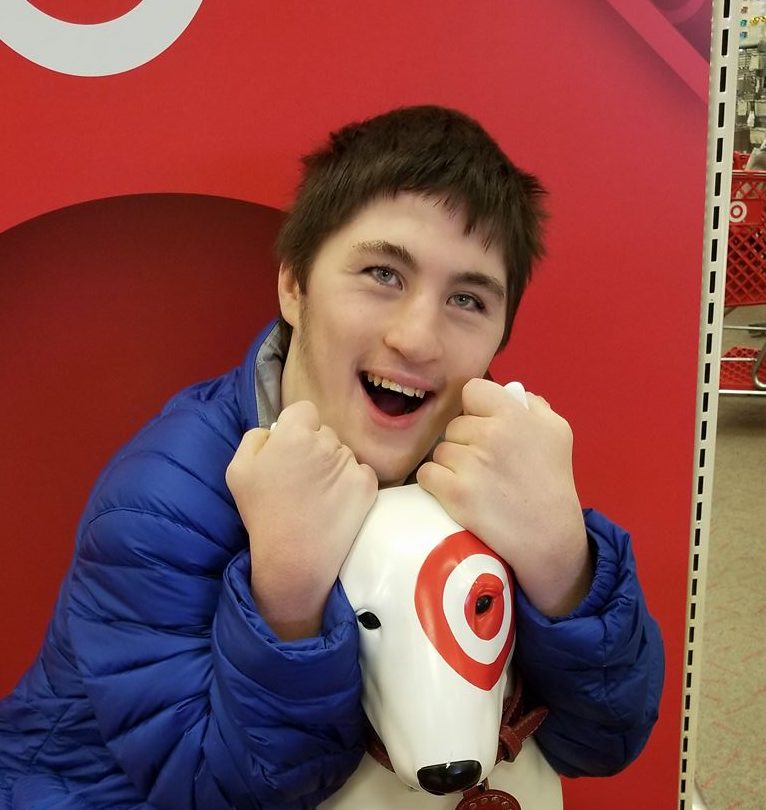
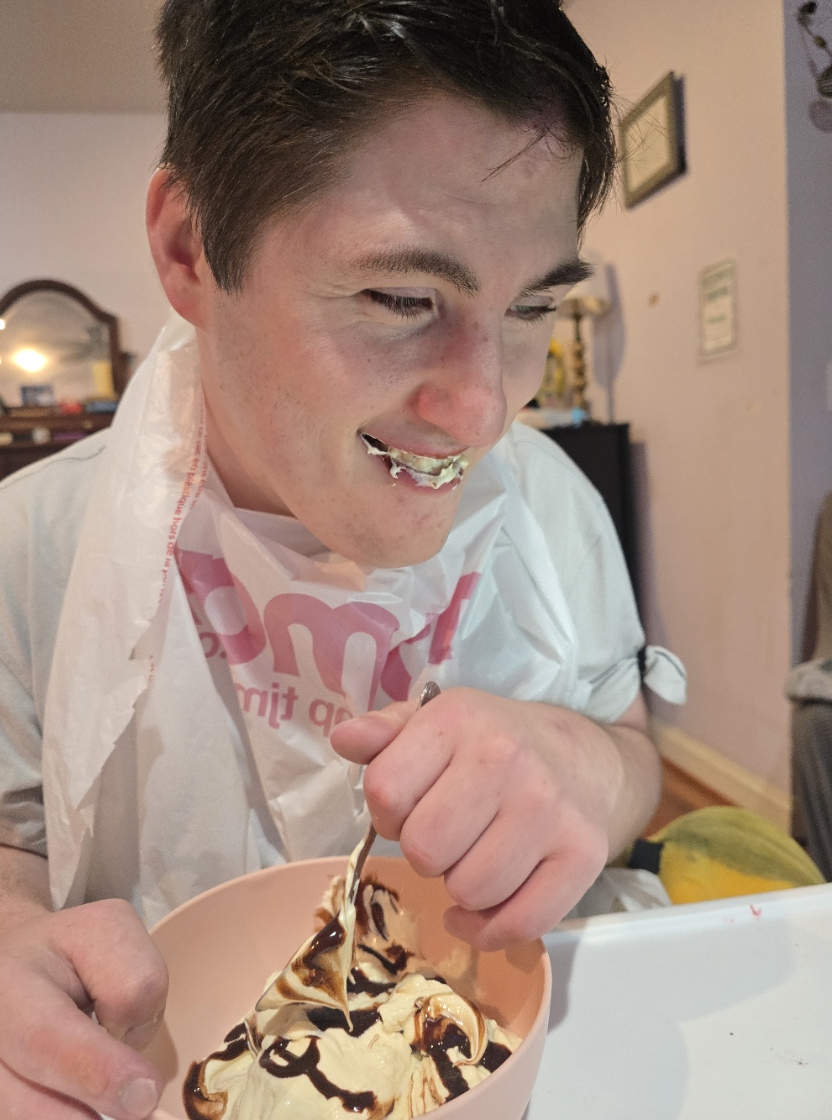
Twenty-four years seems too short yet a miracle.
You were medically fragile but the strongest person I knew.
Your death was shocking but anticipated.
You are my son but you are not here.
I have been looking for answers that may never come. My heart knows healing and alleviation will not be found in the explained. Yet I look.
I did a deep dive into your deletion yesterday. When the geneticist told me twelve years ago where it was and the genes involved science didn’t know much yet about the specifics of what it meant. “Some proteins” was all they said. Despite advances in DNA mapping, I never did research until the after. I didn’t want to be scared. I didn’t want to mute your life because of that fear and I knew if I knew then I would.
The simple breakdown is this: you were missing pieces of chromosome 1 which included about 1.8 million base pairs. It is a moderate-sized deletion though classified as micro. Important information was missing imperative for brain and development, body stability and system regulation, immune and infection response, connective tissue and structural support. Within that deletion were 44 known, important genes that have been identified and studied. Ten of those are linked to medical conditions. I dove into the specific genes like ASH1L, SYT11, LAMTOR2 and RNA and how proteins are involved. The information uncovered to me it was a miracle we made it as far as we did, sweet boy.
I wonder if our DNA is like a symphony. When a deletion occurs, the symphony has missing instruments and incomplete sheet music. Music is still created but other instruments have to play harder and longer to fill in what is missing. Sometimes it doesn’t sound as melodic. Other times it can be quite a cacophony and struggle. Musicians have to improvise and can clash. The stress causes strings to break from the violin playing longer than intended. The cellist fingers begin to hurt. Everyone is playing furiously to compensate for the missing instruments all the while not having all the notes or how long to hold them. It is exhausting and discombobulating to the musicians but it is still music. The process is more exhausting than if they had the complete symphony and all the sheet music. After having to perform that way daily for years, twenty-four of them, and under stress the missing pieces become critical. Daily compensation leads to a tipping point unpredictable and unpreventable until one day the music stops.
But while the music played it was beautiful nonetheless. From this audience of one I never heard the missing notes or instruments. I just heard your laugh and screams of excitement. I will forever miss the sounds.
Your body was working harder every single day for twenty-four years than I realized just to make it through the day. Without those important pieces I can’t imagine how much it took just to stay steady. Other genes and systems could compensate for a while. You, my sweet boy, were the king of fortitude and that carried you. That carried us.
I also saw in the research how over time those systems of compensation become compromised. Hypotonia often becomes worse. GERD and aspiration risk increases. Reserve becomes reduced. Chronic compensation leads to systems becoming fatigued and forces a body to respond more slowly and become overwhelmed more quickly. Everything that can go wrong becomes more likely. And it did.
Your biology was vulnerable and it was also resilient. Both are true. You died young but lived long. Both are also true. You were fragile but strong. I have to find space to accept those seeming paradoxes.
Last night I fell asleep wondering if I was in denial about your medical complexity. In reality, my heart and my brain didn’t hold you as medically fragile or high risk or complex. They held and will always hold you as my son who loved pudding and laughing and hugs and music. I normalized what we lived with and we adapted to risks. Others would often say, “I don’t know how you do it,” and that would perplex me. I just did what needed to be done to give you the best life possible. I hope I did, sweet boy.
High risk was my normal. Fragile stability became baseline. Not living that way would have taken something significant from both of us and replaced our joy with fear. For that I am grateful.
We lived inside a reality that unfolded slowly, silently, and insidiously until it didn’t. You were labeled medically complex and I did my best to protect your life from being reduced to that. We danced. We shopped. We went to concerts. We hugged strangers. We ate pudding. We swam. We loved and lived without intense fear.
After you got sick three and a half years ago they told me you wouldn’t make it. Yet you did. Each night after I would kiss you goodnight. I would tell you how you are my whole world and thanked you for fighting so hard to stay with me. I didn’t know, sweet boy, how hard that fight was every day.
This time when you got sick and we knew the end was near I asked everyone to leave the room. I needed a few moments alone with you. I told you how much I loved you and how proud I was to be your mom. I thanked you for fighting so hard but if it was time to go I would be all right. You didn’t need to fight anymore. I didn’t want you to feel like you somehow failed. I told you how your Dad and Grandpa would be waiting and you would get to meet Jesus. I hoped He would tell you He was proud of me. I already knew, with all my heart, He was so proud of you.
Until your last heart beat I savored every moment with you. Every single time, no matter what I was doing, when you asked for a hug I gave you one. You were such a stinker and would ask for one sitting in your shower chair, soaking wet. I would hug you and you would laugh so hard. I will have that picture in my heart until my last beat.
I sit with the paradoxes that create a push and pull in my soul. I acknowledge both can exist and both are true. I despair it was only twenty-four years. You are irreplaceable. I am grateful it was twenty-four years. You were a miracle. The instruments that will connect those two diametrically opposing movements of my muted symphony, my sweet boy, is found as I grieve your loss and celebrate your life. Those notes are the quality of those twenty-four years. The time we did get we created by giving one another joy, loving lavishly, savoring every shaky hug, laughing at the littlest things, eating wonderful food, and caring for one another in a way even death cannot unentangle. It will be with me always, my sweet boy. As will you.
Missing chromosomes and base pairs, incomplete information – none of that matters as I sob on the couch on this dreary day. You were created exactly as He intended. You were His masterpiece. You were the most beautiful symphony I will ever hear. And being your mom is my highest honor.
I praise you because I am fearfully and wonderfully made;
your works are wonderful,
I know that full well. Psalm 139:14