Tag: God

  • My Father’s Voice

    My Father’s Voice

    When I was a child and would ask my father the definition of a word he would never give me the answer. He would present me with another question.
    “What do you think it means?” he would ask me.
    I would reply “I don’t know. That is why I am asking.”
    His next statement was always the same, everytime. “I will use it in a sentence.” After doing so he would pause and after a moment he would ask again “What do you think it means?”
    I despised this routine. I just wanted him to tell me. I didn’t want to think. I didn’t want to have to figure it out. I just wanted the answers given to me. But I thought as a child. My father knew that I would learn the word better if I figured it out myself. He knew that he was training my brain to think. Though he could have given me the answer he gave me something even more valuable – the ability to find it myself.
    When I became a mother and my oldest child first asked me a meaning of a word without even thinking I looked at him and said “What do you think it means?” I heard my father’s voice as I spoke his truth. The awful, wonderful, frustrating tradition continued.
    When I find myself facing struggles and difficulties I will often ask God what does this mean? Just like my other father, He never just tells me the answer. He doesn’t say “My child, you are to learn to love well” or “I am training you to be strong for something else entirely that I know you will face” or “You need to show this person who drives you crazy who my Son is.”

    God sits silent and in that silence I hear Him say, “What do you think it means?”
    So often in life I am still very much like that child only now my father’s voice is my heavenly Father’s voice. I try to not ask him “why” something is happening. I learned long ago that the answer does not come and even if it did, how would that make any of it any better or the pain any less potent? Why was my child born with special needs? Why did my husband kill himself? Why must I raise my boys void of a father-figure?

    Somethings must be born from the struggle. I am convinced struggle is a different soil. When watered with tears and sweat it will bear fruit that would, simply, not come to fruition any other way.

    I zero in on the “What does this mean?” and “How will this define me?” and “How can this transform me?” questions.
    I suspect that God wants me to truly, earnestly, and vehemently learn the lessons that He will bring out of horrible, difficult, impossible situations. Romans 8:28 is a Bible verse we who follow know well.
    “And we know that for those who love God all things work together for good, for those who are called according to His purpose.”

    But we often stop at that verse perhaps because it fits neatly on a coffee mug or book mark. However, it is the next verse that, to me, solves the mystery of what I am supposed to learn and exactly why and how God works all things for good…
    29 For those whom He foreknew He also predestined to be conformed to the image of His Son, in order that he might be the firstborn among many brothers.

    To be conformed to the image of His Son…

    He doesn’t work all things for good so that we can have nicer cars or promotions or Facebook perfect lives. The answer to the “what does this mean” question is never something my flesh would crave but something my spirit desperately needs. It is so that I will be more like Jesus. The kicker is, I have to let Him. I have to be willing to zero in on things of eternal import.

    Why was my child born with special needs? I do not know. What have I learned from it? Patience, resolve, kindness, perseverance, how to choose joy, unconditional love, and the list goes on. Why did the heartache of my husband’s death pass through God’s hands and why did He allow it to happen? I do not know that either. What have I learned from it? God is faithful. He is close to the broken hearted. He is the defender of the widow. His promises are true. He restores what was lost, perhaps not in the way we expect or desire, but we are blessed by the restoration. That list goes on as well.

    I believe that God sits in silence sometimes even when I am the child demanding answers precisely because the answer must be attained so that I can learn it on a soul level. It must be ingrained into who I am so that it is natural for me to take what I have learned and utilize it with confidence because it is mine. I have ownership. I can use it to help others and I can allow God to use it to transform me ever so gradually into the image of His beloved Son. As Christians, that is the ultimate goal after all…to hear our Father’s voice and be transformed, glory to glory.

  • Embracing Our Brokenness

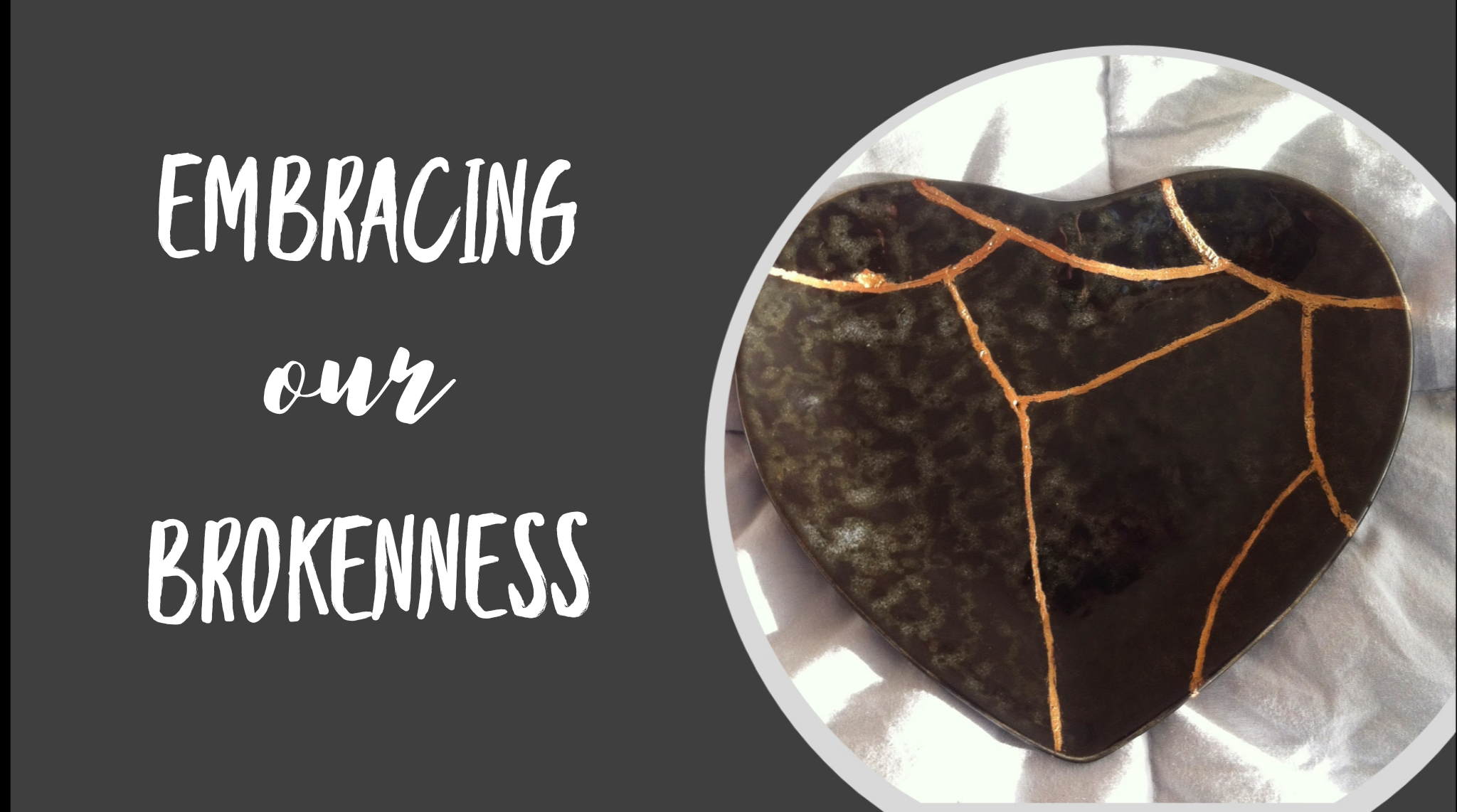
    Embracing Our Brokenness

    I recently had the honor of sharing my testimony with the Ministry for Women at my church. The audio is below.

    I’m sharing mostly because friends had asked to hear but, honestly, I can’t figure out how to share it with anyone who does not have gmail.

    At any rate, this is part of my story.  I hope it blesses His heart

  • Find the K’s

    Find the K’s

    I bought Nathan, my five-year-old, a workbook to reinforce his pre-k lessons regarding learning letters. One of the exercises required him to circle all the letter k’s from letters randomly thrown across the page. Once that was complete he was to connect the circles to reveal the picture. He had a role to play and had to put effort into the exercise.

    I watched as my son examined the letters with the tenacity of a scientist. He carefully circled each k he could find. I gazed down at the page and could easily see what the picture would be . From an adult’s mind there was no great mystery to be revealed but to a child it was entirely unknown.

    Halfway through circling the k’s he looked up at me with his gigantic blue eyes.

    “What is it going to be, Mommy?” he asked.

    “Keep working baby,” I told him. “You will see”.

    He could not decipher the image as it slowly unfolded. I could have just told him, “Oh it’s a kitten with a kite” and ruined the surprise for him. I could have given him the information and all his hard work would have been for nothing. Giving him the answer would not have helped him learn the lesson brought before him. Instead, I waited patiently as he continued seeking.

    A few moments later he looked at me and said “Mommy I want to circle some of the n’s for Nathan” as he circled one.

    I gently remind him that was not the task at hand. If he circled the n’s he would not see the picture that was intended. I helped him refocus on what he was supposed to do but I did not condemn him. I did not yell at him for becoming distracted. I gently nudged him back to where he was supposed to be. It was entirely up to him to listen or not.

    “But I circled one,” he told me with discouragement.

    “It’s ok, we can erase it and pretend like it never happened,” I said taking the pencil from him to rid his mistake.

    “Thank you,” he replied sweetly as I kissed him on the head.

    Once he finished his eyes lit up with utter joy and excitement.

    “It is a kitten flying a kite!” he screamed.

    At that moment I limited myself to join him on his level and said with equal excitement and surprise, “It is! Well done!”

    I was not condescending even though I knew all along what the picture would reveal. I genuinely was thrilled. I applauded the effort and relished his sense of accomplishment.

    How often is this the scene from my life? I know what I am supposed to be doing. I am searching for my k’s so that I might connect the dots and see the mystery unfold before me. Some days I can be tenacious and other days I am rather lazy. Some days all of the k’s stand out and I can clearly see the direction to take. Yet other days life is such a jumbled mess I cannot see with clarity. I have times when trying to put order to the chaos is overwhelming and I am sure it will never be more than a complete mess.

    Even so, God is standing over me. He is encouraging me to keep on trying. He knows what the picture will be. Not only can He already see it, He created it. He knows that upon completion I will be ecstatic with what has been given to me. He lowers Himself as any good parent would and is just as excited as I am when the final picture is revealed. He may even exclaim, “Well done!”

    But I get distracted. I want to wander from what I am meant to do to what I want to do. My focus is diverted to something that does not contribute to the beautiful picture being created for me. I misstep. It is corrected, blotted out by a loving and gracious parent. He tells me, “It is ok. We can pretend as if that never happened. I erased it for you already.”
    He gently nudges me to continue. He tells me that though it doesn’t make sense right now, with each next step the picture will become a little clearer.

    I persist. The more k’s I circle the fewer letters there are to sort through. It becomes easier and easier for me to find another one and then another. I just do the next right thing.

    I rejoice in the accomplishment when the picture is complete. I can finally see how my hard work with God’s guidance and Grace has created for me beauty from chaos. I thank Him for His love and encouragement. He kisses me on the head. With the eagerness of a child I say, “May I have another one?” and He happily hands me a new page.

  • Joyful Expectation

    I wait for the Lord, my soul does wait, and in His word do I hope. Psalm 130:5 

    20180309_105242
    My middle son, Wesley, has a favorite game that I play with him. Though he is sixteen years old deletions on his first chromosome have left him cognitively a three-year old. In our game Wesley lays down and I am next to him. I will smile and say “Oh, my, where should I…..” I pause for a few moments as Wesley squeals and giggles with absolute delight. He knows that after the exaggerated pause I will either kiss him, tickle him, or boop him on the nose. For him the fun of the game lies in the anticipation with the expectation that something marvelous is about to happen.

    His entire body will twitch with excitement. His laugh comes from the depth of his soul. He is not anxious or worried about what is to come. Even with his severe cognitive impairment he knows that he is dearly loved. He knows that I am his mother and only have good things planned for him. He waits to see what is going to happen with joyful expectation.

    When I grow weary from waiting for God I think of this game with Wesley. In my scenario I am the child waiting with joyful expectation as God is right next to me. Even with my limited, human capabilities I know He is good and that He loves me. I am assured that when something is to come from Him it will be more than I could have ever asked or imagined. Every single time.

    Often in my life I have found myself waiting. When I rush ahead of what God is trying to do I ruin the surprise of what He had in mind. Moreover, my plans are never as great as His. If I am being wise waiting for Him is not an option, it is compulsory. How I wait, however, is my choice.

    I can wait with joyful expectation. I can rest in the knowledge that doors are opening and closing as His plan unfolds. Perhaps hearts are softening, even my own. Conversely, I can wait with anxiety and dread but there would be no purpose in that. It would only cause me to be in a place I do not need to be.

    For we have the blessed assurance that God will deliver something loving, something kind, something we long for, something that tells us we are His and we are loved. Forthcoming is something magnificent like a kiss, a hug, or a boop on the nose from a beloved parent.

  • Power

    We were without power for almost 24 hours before it went back on this morning. High winds left trees toppled. My children’s trampoline flew to the other side of my almost 2 acre yard.

    No power leaves everyone unsettled. It is easy to forget how much we depend on it until it is no longer available. There is no person in my home more inconvenienced than my five year old son, Nathan.

    In the middle of our blackout last night Nathan asked if we could pray for the power to go back on. He folded his little hands, bowed his head and said “Dear God, please give us electricity back. Amen.” As soon as he finished, the lights flickered on and off a few times. The electricity didn’t stay on but it was as if God replied, “Sweet boy, I hear you.”

    God gives us these moments when He does reply just to let us know He is present. Sometimes we miss them because we are so busy or our intellect chalks it up to coincidence. We can’t imagine a God in charge of the universe would care whether or not we have power. But He does. We become jaded because of all the other times the answer was “no” or “not now.” But sometimes the answer is just a glimpse or a reminder that while He hears us the final answer will have to wait.

    My sweet son doesn’t have those blockades in His relationship with God. He believes with his entire sweet, innocent heart that he has a direct line to God. The beautiful part is that he does. The beautiful part is that I do too. And so do you.

    I just need to have faith like a child. I have to suspend all that this world has done to me and distill faith down to its purest element – that God loves me entirely as if I am His favorite child. I love my children all uniquely and each of them with my whole heart. Every one of them is my favorite child.

    It takes effort to be like a child because so much has happened to me from when my heart was soft until now. I have to be careful to not blame God for the things a broken world did. I have to think with my heart and in every other relationship that is unwise except for mine with Him.

    Imagine what power lies within us if we can attain faith like a child but have the wisdom gained through years of experience.

    Nathan’s prayer last night, I believe, went straight to the ear of a loving, kind, and gentle God. See, the power was not in the electricity. It was in a little boy with the faith of a child.

  • Make It Better

    Make It Better

    I can honestly say that I would not love my middle son, Wesley, more if he had a complete set of chromosomes. He would not be more my child if he did not have a diagnosis of autism. He is my joy and it is a privilege to be his mother.

    Once in a while, though, my mind wanders to wonder what life would be like if he did not have multiple diagnoses. What would it be like if he did not have a different doctor appointment every few months? What if he didn’t need to go to a special school? What if he didn’t have a feeding tube? What if he could speak with words? What if he didn’t have melt downs and hurt himself? What if he was born typical?

    I took this picture just before Disney Live began. I think it is a safe assumption that he was the only sixteen year old in the place screaming at the top of his lungs every time Mickey  Mouse came on stage. Every. Single. Time. His joyful noise comes from the depths of his soul and it is magnificent. This photo reminds me that love is felt and not spoken. Love is shown and received in the little and sometimes silent places in daily life. Yet, it also brings my mind to a place in a parallel universe where, perhaps, special needs is not part of my family’s constitution.

    tmp_2018022320404552144

    He almost looks like an average teen ager in this picture. I see the slightest glimpse of how he would look if he did not have special needs. Had he been born differently, Wesley would be in tenth grade. He would have his drivers permit. He would be wrestling with math and how to talk to girls. He would roll his eyes at me and think I am very old.

    I wouldn’t have to change his diaper or tube feed him. He wouldn’t need a wheelchair to be pushed long distances or to get on the school bus every morning. He would not need several medications twice a day. There would likely be no IEP or SLP, OT, and PT. He would not listen to the same Andy Grammar song over and over and over for years and years and years  and no other music. Instead of Blues Clues he would be watching action movies or science fiction. He would play video games. He would hang out with his buddies. He might even play a sport or musical instrument.

    But that is not where I live. From time to time my imagination visits there but it does no good to sit in that place for long. Instead, I try to make it better where I am. I refocus on the fact that he is precisely who he is supposed to be. I see all he does instead of that which he cannot do. I see abundant, unconditional love. I see God in my beautiful son.

    My ability to alter my focus to not dwell upon things unchangeable began in the United States Air Force. My father joined before I was born and for much of my childhood it was all I knew.  It is a challenging way to grow up. We moved every three years. Friendships were fleeting and my father was gone a lot. I was the constant “new girl.” Before I graduated high school I had been to six different schools. By military standards, however, that wasn’t so bad.

    Often we would arrive at the new base a few days before our furniture. My parents would make it a game and we would pretend we were camping. With only sleeping bags and pillows we would all gather in the living room.  There was no television or radio –  just my parents, my brother, and me. It is one of my fondest childhood memories. It birthed in me the ability to turn an inconvenient situation in to a glorious adventure.

    This notion became part of who I am. In college it hung in a frame by my door:share_temporary (4)

    Growing up a Military Brat I learned respect, duty, and honor. I understood at a very young age that complete strangers are willing to leave their families and, perhaps, die to protect others. I learned it before I could even hold my own head up as my father was shipped to Vietnam and missed the first year of my life. But I also learned resiliency and efficiency. I could blend in to my new environment quickly, including adopting the local accent. Much of my survival in school was based upon that ability.

    Part of that survival was also figuring out how to find and focus on all the reasons being where I ended up was actually better. Even the smallest blessings could sway my attitude toward our latest station. I can so clearly remember learning to like a new place simply because the swings were a little higher than the last base.  I couldn’t change the place in which I found myself but what I could change was my perception of it.

    The lesson of making a place better was one I carried with me into my adulthood. It became the mantra and saved my mental well-being when I found myself in situations beyond my control. Like the child growing up on bases across the country, I have throughout my life been thrust into situations beyond my doing or control.  My life has taken paths through the worlds of special needs, addiction, and suicide. Not one of those destinations had anything to do with my behavior nor were they consequences of my actions. They simply happened to me. It is a life I did not choose but, rather, was chosen for me.

    As a child and even now I could spend my time wishing I was at the place I left behind but it wouldn’t change where I ended up. I would simply miss out on all the wonderful things about my new adventure.

    I discovered this writing by Emily Kingsley soon after Wesley was first born. Everyone’s journey is unique but this was true to my heart.

    Welcome to Holland

    I am often asked to describe the experience of raising a child with a disability – to try to help people who have not shared that unique experience to understand it, to imagine how it would feel. It’s like this…

    When you’re going to have a baby, it’s like planning a fabulous vacation trip – to Italy. You buy a bunch of guidebooks and make your wonderful plans. The Coliseum, the Michelangelo David, the gondolas in Venice. You may learn some handy phrases in Italian. It’s all very exciting.

    After months of eager anticipation, the day finally arrives. You pack your bags and off you go. Several hours later, the plane lands. The stewardess comes in and says, “Welcome to Holland.”

    “Holland?!” you say. “What do you mean, Holland?” I signed up for Italy! I’m supposed to be in Italy. All my life I’ve dreamed of going to Italy.

    But there’s been a change in the flight plan. They’ve landed in Holland and there you must stay.

    The important thing is that they haven’t taken you to some horrible, disgusting, filthy place, full of pestilence, famine and disease. It’s just a different place.

    So you must go out and buy a new guidebook. And you must learn a whole new language. And you will meet a whole new group of people you would never have met.

    It’s just a different place. It’s slower paced than Italy, less flashy than Italy. But after you’ve been there for a while and you catch your breath, you look around, and you begin to notice that Holland has windmills, Holland has tulips, Holland even has Rembrandts.

    But everyone you know is busy coming and going from Italy, and they’re all bragging about what a wonderful time they had there. And for the rest of your life you will say, “Yes, that’s where I was supposed to go. That’s what I had planned.”

    The pain of that will never, ever, go away, because the loss of that dream is a very significant loss.

    But if you spend your life mourning the fact that you didn’t get to Italy, you may never be free to enjoy the very special, the very lovely things about Holland.


    How many times in my life have I landed in unknown territory? How often has life taken me on a detour to a place I never imagined nor wanted to go?

    I inhale. I exhale. I grieve. I cry. I mourn. I pray. I stand back up. I learn the new language. I discover who I am in the present situation. I look for whatever is lovely and noble and true even in the midst of seeming hopelessness. I seek out the positive no matter how hidden. I am relentless in my pursuit to make it better because I am there.


  • Rather A Privilege

    Taking two children to a store doesn’t seem like a big deal. However, Nathan is five ears old and Wesley is sixteen but cognitively closer to a three-year old. He has autism. Genetics are strong, though, and like his mother he loves to go shopping.

    We pulled in to the lot of Target and I turned around to see that Wesley managed to take off both his socks and shoes. I glanced out my window and saw families just jump out of the car and go in. For a moment I envied the simplicity of their lives. I envied the fact that they probably did not even know the ability to go easily into the store was something to be envied.

    I put Wesley’s socks and shoes back on. His feet are deformed and socks do not go on easily so it took a few minutes. I made sure his sippy cup and two extra bottles of Pediasure were in my purse. I grabbed the IPad with the most charge to ensure it wouldn’t die while in the store for that could be catastrophic. I checked that everything had straps and clips to tie to the cart as to not injure anyone from flying objects. Wesley often throws items when he is no longer in need of them. Sometimes he throws them to get your attention because he cannot speak. A simple solution to him can be painful for the one getting hit in the head with a full cup.

    I unstrapped his seat belt which has a special safety device to prevent him from unbuckling himself. Wesley’s brain often takes time to process what is occurring so he rarely gets right out of the car. He has to sit and look around and wait until he understands what we are doing. Life with Wesley requires patience and I don’t mind waiting. Forcing him to move faster only stresses him out in a way I do not understand.

    Finally, we stood outside the car and I looked toward the entrance. It might as well have been a mile away because one million things could happen between where I was and where we needed to be. Wesley might decide he wants to go home. He might want to sit down in the middle of the parking lot and not move until he is ready. He may have a melt down for reasons I will never know. All the while I will have to keep Nathan safe both from cars and Wesley’s “enthusiastic pats”.


    As I began to feel overwhelmed and I had not even reached the store yet I remembered all the times I held him in the Pediatric Intensive Care Unit unsure if he was going to live or die. I thought about the time when he was only one year old and was connected to so many monitors I did not even know what some of them were tracking. He would cry every time I tried to lay him down. I sat in the rocking chair of the hospital most of the night trying with all my strength to stay awake to keep holding him. Eventually I relented and knew sleep would not be defeated. So I placed him in the crib and crawled in next to him. The next morning the nurse came in to find me curled up asleep.  She exclaimed “In all my years here I have never seen this.” I did what I needed to so that he always knew I was near.

    In my heart’s mind I see the faces of dear friends who had to bury their children. I live in a world where children die at a disproportionate rate than most people’s experience. I know those parents would give anything to take 30 minutes to get from the car  in the parking lot to Target. They would give up an appendage to have to put their child’s shoes on for the fourth time before ten o’clock in the morning. I recall standing in a funeral home to offer my sympathy to a mother and father as their child laid in a tiny casket. I remember my heart breaking that they even make caskets that small and that my friends needed to buy one. From their perspective, I am sure, these are not minor inconveniences. Rather, they are privileges.

    Standing in the parking lot I gaze at Wesley and I hear myself whisper, “Thank you Jesus.”

    share_temporary (3)

  • The Third Box

    There are three major events that have shaped me in the last 16 years. Interestingly, all three of these events carry diagnosis that are often whispered about but rarely understood by those not in that world. I write openly about my son’s special needs and my husband’s suicide. My intention for the transparency is to, hopefully, open the lid and let light shine into the darkness. Only heinous things grow in the dark. Shame grows where no light shines. Lies expand. Depression flourishes. The power to destroy depends on darkness.

    We shove things that make us uncomfortable into a box. We close tightly the lid and put it out of sight. We don’t want others to know we have labels like that in our possession. But we do. I dare say we all do.

    It has somehow become one of my life’s missions to try to erase some of the stigma attached by proclaiming, “It happened to me. There is nothing for which to be ashamed.” Indeed, the true shame lies with the society that allows those with challenges to not only remain hidden but almost demand they remain so.

    Yet there is one thing I have not shared even with some of my closest friends. I have held this secret for so many years it just became part of me. However, if I am being honest in  my endeavor to bring light to decrease the power of shame then I am being a hypocrite by not writing about the third thing. And so, in my most vulnerable post, I open the third box.

    In 2004 my now deceased husband came to me as I sat on the bed. With shaking voice and tears in his eyes he took my hand and said, “I have a problem. I need help and it has to be inpatient.”

    His proclamation was preceded by events which I am not ready to share only to say they were horrific. He hit rock bottom and he hit it hard.

    A few hours later I packed my children and dogs in the car and drove 18 hours straight to check him into rehab. Gary had developed an addiction to Percocet. A few months before he had been prescribed the medication for tendonitis. As a maternal fetal medicine specialist he performed numerous ultrasounds a day. The repetitive motion caused an injury and he needed medication. It started off legitimately. It did not end that way.

    Because of the shame of his disease he could never receive the help he needed. For a while we would drive to Northern Virginia so he could participate in AA and NA meetings without fear of patients, friends, or colleagues seeing him walk into the meetings. He was sure if people in our town knew it would ruin his reputation. He lived with his enormous secret until the day he died. I carried it until now.

    The addict is not necessarily the man on the corner with a cardboard sign begging for money. The addict is your spouse, your child, your doctor, your teacher. He is the manager at your favorite grocery store, your pastor, your friend. The addict is someone you know or perhaps love. The addict might even be you.

    Our society judges them. We joke about their disease and it is still socially acceptable. We put them in jail rather than rehab. We create laws, as we should, to make getting the drug more difficult but what we fail to do is create a path to make it easier for them to get help. We try to demonize them because we want to put as much distance between “us and them.” For if it is “us and them” we subconsciously believe we can never be like they are. It gives us a false sense of both superiority and security. But the truth is some of us are one pill, one drink, one puff, one mouse click away from being an addict.

    For years I thought I needed to protect Gary’s legacy so I guarded and carried his secret. I didn’t want people to think less of him. I have found that committing suicide receives more understanding than being an addict.  Most of us don’t think of addicts as they are – normal people fighting a formidable opponent in the dark

    Addiction is a disease. Though the addict chooses to use his drug of choice he does not choose to become addicted. It is a complex process and so misunderstood. They say it is a family disease but I believe most chronic, powerful diseases are. Like other diseases some people will respond to treatment and some won’t. Some will die from their addiction and it is just as a significant loss for the family as cancer is.

    During Gary’s eulogy I tried to offer words of closure to the various populations at the memorial. He was a beloved member of the community and every walk of life was represented from prostitutes to politicians.  In the closing remarks I offered this:

    To those who suffer depression and addiction, I believe he would remind you that your disease is relentless and to fight it with all you have. Tend to your recovery like a delicate garden watering it every day and rooting out the weeds immediately. He would tell you to not be ashamed of your disease. People with cancer and diabetes do not feel shame because of theirs nor should you.

    I have spent the last fourteen years feeling personal shame while telling people there is nothing for which they should be ashamed. In my quest to bring light to the things we try to force to remain in the dark, I have been disingenous. It is arrogant of me to determine what Gary’s legacy will be. Perhaps it is not of a man with a secret but a person who couldn’t get the help he needed because shame exists where it should not. What if part of his legacy is a cautionary tale of what can happen if nothing changes?

    I haven’t allowed God the opportunity to do what He does best. I haven’t made the way so He can redeem the situation and work all things for good. He will not force His way into a situation but waits to be invited. I invite Him now and I know He will use Gary’s truth even if it touches just one person.

    I open my third box to expel the shame and darkness. I know with certainty God’s light will grow something else entirely. Just what if my broken down, dingy box is exactly what God needs to grow a beautiful garden?

    wordswag_1518646290327


  • The Root

    “Expectation is the root of all heartache.”

    Have you ever asked a pregnant woman if she was hoping to have a boy or girl? More often than not her response is, “I don’t care as long as it is healthy.” But what happens when your baby is born and it is not healthy? What happens when they hand him to you and say words like “genetics, syndrome, anomalies, life long challenges.” What happens when your reality is the nightmare of others?

    You hope but with a hope that is boiled down to its very simplest form. You no longer hope of tossing a football or ballet lessons. You hope that the medicine stops the seizures. You hope you can learn to run a feeding tube pump. You hope the surgery is successful. You hope the doctors are wrong and that your baby will live to see another day. You hope you will somehow survive if they are right.

    When I learned to hope for the very basic necessities in order for my son’s life to continue I learned to be thankful for everything else. There have been several times in Wesley’s life when there wasn’t even an expectation he would live. In the absence of expectation hope is still not defeated and the way is paved for something far greater. I have learned to live with no expectations. The fruit that blossomed from that barren tree is excessive gratitude.

    Often expectations lead to disappointments and heartache. When we break free from those expectations it is more difficult, though not impossible, to feel disappointed. When you have nothing you are grateful for anything. Sometimes the converse is true. When you have everything you are grateful for nothing.

    Anyone with children has likely read, “What to expect when you’re expecting” or “What to expect in the toddler years.” Entire books are dedicated to letting parents know what to expect complete with charts for milestones. I think we often actually find security in living within the lines. Yet some of us are given children for whom none of those rules apply. We do not know what to expect and the experts can’t tell us. It all goes out the window and we live one day at a time, one surgery at a time, one test at a time.

    When Wesley was an infant and toddler it was uncertain if he would ever walk, talk, or even eat by mouth. At one year old he weighed only fourteen pounds. His official diagnosis was “failure to thrive.” At the time I felt as if I should receive the diagnosis “failure to mother.” To my heart it was somehow my fault that my baby wasn’t growing appropriately. He wasn’t even on the growth chart, he was well below it.

    His first birthday was spent in the hospital after receiving a feeding tube and to this day it remains part of him. For years I had to bolus feed him every four hours and hook him up to a pump at night. It was an intensive, time-consuming process. Not taping the tubing correctly could result in a kink and the alarm would sound. The tubing could and often did become disconnected but continue to pour thirty-two ounces of Pediasure into his crib. He would sleep right through it and I would find him the next morning soaked. When he finally could tolerate food placed in his mouth years later, even pureed, I was not disappointed that it was only stage 1 baby food. On the contrary, I was overjoyed that progress had occurred. I never expected him to eat so when he could I was exceedingly thrilled. At sixteen he still eats baby food but he eats.

    He is non verbal other than the two words “Mom” and “Bob”. Those are his priorities – his mother and SpongeBob. He uses simple sign for other needs but decompensates when he cannot express something through sign language. He becomes self-injurious out of sheer frustration.

    I used to pray every day that he would speak. I thought if he could he wouldn’t harm himself. I wanted to hear his beautiful voice say “I love you”. I wanted to know how his day was and what happened at school.

    But the day never came when Wesley spoke. God answered, “No” and I don’t know why. Something as basic as speech was a milestone he would never hit. I never expected for Wesley to talk so I am not heartbroken that he doesn’t. I hoped, yes, but instead of living in what didn’t happen I move on. I focus on the things he can do and am grateful. I rejoice in the fact that Wesley does say “I love you” even if it is not in the way I hoped and most would expect. I hear it from his soul’s voice and there is no sweeter way to receive it.

    Living outside the chart of normalcy can be a scary and wonderful place to exist. We have no guideposts telling us if we are on the right path or how far it is to the next stop. Yet there is incredible freedom. Our definition of excelling is the tiniest amount of progress and no accomplishment is too small for an all out dance party celebration.

    When I finally learned to release my expectations I cleared the way for God’s. My disappointments are not His nor are my expectations. What we expect as a culture is not always, perhaps even rarely, the things which God expects. Our society does not value people with chromosomal abnormalities. We expect to have children with the near perfect DNA and above average intelligence. But just what if that wasn’t God’s expectation? What if His expectation is where there is life there is extraordinary value? What if He expects that child with a syndrome would bless every person who came into contact with him like my son does? What if God expects that child to be exalted because he teaches us to give and receive unconditional love? What if God expects us to realize what a privilege it is to have a child with special needs and not the burden as most of society thinks? What if God’s honor roll is not based on the contents of our intellect but the capacity of our hearts? I would declare that the contents of Wesley’s heart are exactly how God intends them to be and he enjoys a place on the highest honor roll.

    How much more magnificent and rich yet simple would my life be if I could release all my expectations to allow room for God’s? As with all hopes, dreams, plans, and expectations God’s are always incomparably better.

    share_temporary (1)

  • Cookies

    “The Lord is near to the brokenhearted and saves the crushed in spirit.” Psalm 34:18

    Hope is born from and in despair. That is my truth. Sometimes hope shows up like fireworks against the dark night sky, gloriously and brilliantly. It’s presence is awe inspiring and unmistakable. But other times I feel as if I am looking in a “Where’s Waldo” book.  Though they tell me it is there it takes more work than one would think to find it. It doesn’t matter how it appears, though, I am just grateful it does.

    On February 10, 2011 my husband committed suicide. I think every suicide is a shock whether or not the person has had a long history of depression, addiction, mental health issues, or tragic events they simply could not handle. Suicide goes against every natural instinct in the animal kingdom yet it is chosen by those for whom the pain of living is greater than the pain of dying. However, the pain doesn’t go away. I know it is cliché but the pain is given to those who loved them. The terribly ironic part of suicide is that the pain one feels that causes him to kill himself would have, had he just held on longer, gone away. The pain transferred to loved ones left behind is permanent. It may wane but it never ceases to exist.

    Daughters and sons will always miss their lost parent. Every occasion that should be a celebration is tainted and marred by that person’s absence. Sadness is perpetually intertwined. There will be countless moments the survivor whispers, “you should have been here.” The absence is always felt at every holiday and every birthday. Bittersweet becomes our norm. It does not come alone but is accompanied loyally by abandonment, anger, whys, and what ifs. An entire family is robbed. The past is stained and the future broken.

    Gary’s suicide was not preceded by any of the typical warning signs.  There were no whispers of wanting to die and nothing to indicate he had given up. Sometimes death approaches so quickly the unravelling is hardly even noticeable.

    The trauma of his death was compounded by the fact that I was the one to find him. It was a memory forever planted in my mind and would take years before I did not see that image several times a day every single day. It haunted my waking consciousness and night time dreams for a very long time. For a while there was no escape.

    Two days after he died I still had not eaten a bite. Though friends brought food, I just could not force myself to partake.

    “Please, just eat something,” my best friend Deanne begged.

    “The only thing I could eat right now is girl scout cookies,” I replied.

    Five minutes later the doorbell rang. There had been a steady stream of visitors. I  knew I was blessed to feel so loved at a time I felt so completely alone.

    At the door stood my neighbor, Lori who didn’t know Deanne.

    “I’m so sorry,” she said with eyes flooding from compassion. “I brought you these,” she said holding up two bags full of girl scout cookies.

    There it was. The slightest pearl of hope had been born even in the midst of my despair.

    Lori delivered much more than cookies to me.  She brought kindness and sustenance. She delivered relief to my friend who was worried about me. More than that she delivered the reminder that God was ever so close and that He would take care of me. He would provide my every need. If He cared about something so small as cookies, what would He not give me?

    Thankfully, when my husband died I already had a close relationship with God. I hate to imagine how difficult it would have been to try to find Him in the middle of all the confusion.  I knew He was right there carrying me because I knew where He was before disaster hit.

    Some may think girl scout cookies showing up just after I had asked for them  was a coincidence. My life is full of too many of these moments to be called coincidence. I call it divine intervention. I name it the hand of a loving God.

    God is near to the broken-hearted. I imagine it is similar to how I am when my children are ill. My youngest son, Nathan, just recovered from pneumonia and a double ear infections. During his infirmary, he held on to me as if my  very presence somehow made the illness feel less awful. Even in his sleep he was sure to be physically connected to me even if it was just his little hand on mine. By having me close he felt safe. His heart needed my presence because I am still, in his eyes, something bigger than he is.

    He also knows that if I am near his physical needs will be met . When he is sick he is able to tolerate discomfort much less than when he is well. He knows that somehow I am able to assist in lessening the symptoms by giving him medicine or a cool cloth. He is still at that wondrous age when mommy kisses can actually make it all better.

    It isn’t that I am more attentive but I am eager to do more for him. When he needed something to drink I would get it for him even though technically he could have gotten it for himself. But what would that say about me as a mother who would ask her sick child do something for himself when I could?  I wanted to do all that was in my power to take away that discomfort of his illness by letting him rest and regain his strength. I wanted him to know he is so very loved because that does help even in the worst of circumstances. To know you are loved by another ushers in comfort, peace, and strength unlike anything else.

    I love my children the same whether they are at school or sitting in my lap. The value and intensity of my love does not increase or decrease according to their proximity. What does altar is their need to feel my presence based on circumstances so I draw closer. I am available. I will do anything to help them including watching YouTube on end (a mother’s ultimate sacrifice, I would argue).

    When my husband died I was ill. I was hurt. I was in a new level of despair I did not know existed and I wasn’t sure there was a bottom. For days and weeks it felt as if I was free falling but I was not alone. I had friends and family who though they could not be in that vortex with me, I could hear their shouts of love and encouragement. I could feel their prayers. I would catch an inkling of hope. I had days I only hoped I would be able to hope again.

    Most of all, I had a God who would give me girl scout cookies.

    20180202_174843